

You pour hours into your content, your offers are solid, and you genuinely care about your audience. Yet somehow, you still feel invisible online. That frustration is real, and it's one of the most common things solo creators face when trying to grow. The problem usually isn't effort. It's the absence of a clear, repeatable brand-building process. This guide breaks down exactly how to build a recognizable brand as a solopreneur, from defining your identity to measuring what's actually working, using practical tools and steps you can act on today.
Table of Contents
- Essential ingredients for brand building
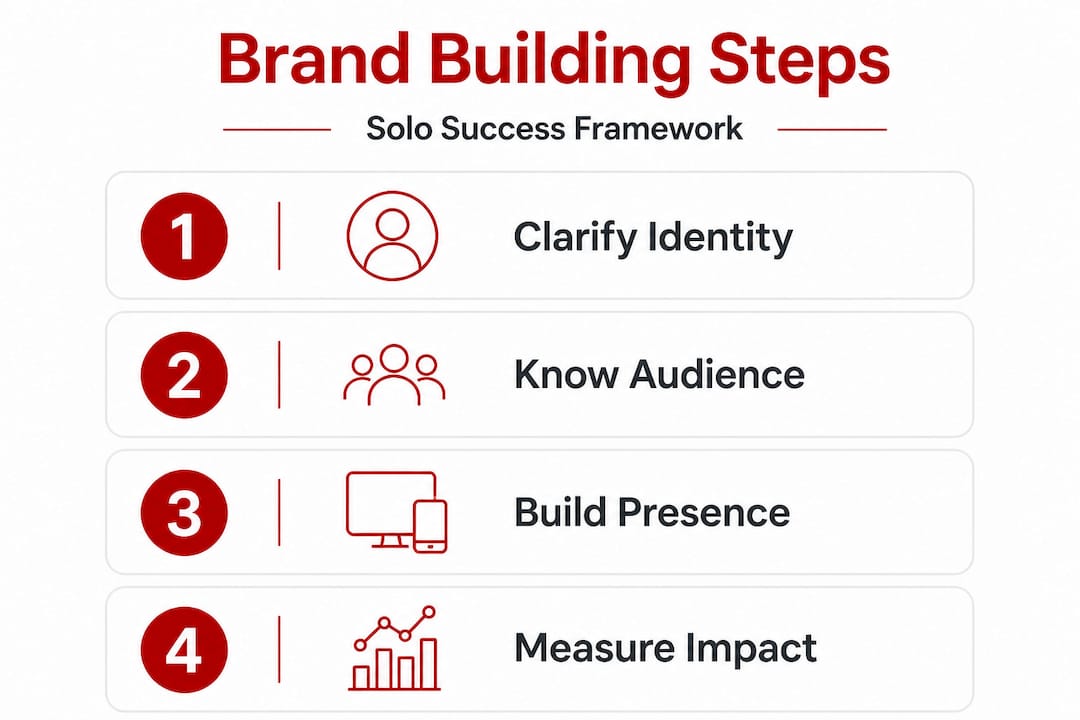
- Define your brand identity: Step 1
- Know your audience and position: Step 2
- Build your content strategy and digital presence: Step 3
- Troubleshooting and measuring your brand impact
- What we've learned after years of solo brand growth
- Upgrade your brand building with the PaidSolo stack
- Frequently asked questions
Key Takeaways
| Point | Details |
|---|---|
| Brand clarity first | Start with a strong personal mission and visual identity before deploying tools. |
| Know your audience | Detailed audience understanding shapes positioning and content strategy for solopreneurs. |
| Leverage smart tools | Simple, integrated tools like Canva and Buffer streamline solo brand-building and analytics. |
| Track and iterate | Use analytics and audience feedback to verify growth and refine your approach. |
| Keep it lean | Stay focused on authenticity and simplicity; avoid overwhelming yourself with tools or trends. |
Essential ingredients for brand building
With the problem defined, let's lay out the must-have tools and ingredients before taking action. Think of this phase as gathering everything you need before you start cooking. Jumping into content creation without these foundations is one of the fastest ways to waste time and money.
The core ingredients every solo creator needs are:
- Brand clarity document: A one-page summary of your mission, values, and tone of voice
- Audience persona: A detailed profile of your ideal follower, buyer, or subscriber
- Content framework: A repeatable structure for what topics you cover and how often
- Visual identity kit: Logo, color palette, and font choices that stay consistent across platforms
- Tool stack: Lean, purposeful tools that handle scheduling, design, analytics, and email
On the tool side, building a personal brand as a content creator means investing in platforms like Canva for design, Buffer or Hootsuite for scheduling, Google Analytics for traffic insights, and an email platform like Mailchimp or Systeme.io to nurture your audience directly.
Here's a quick comparison of the most essential tool categories and what each one covers:
| Tool category | Example tools | Primary function |
|---|---|---|
| Design | Canva, Adobe Express | Visual content creation |
| Scheduling | Buffer, Hootsuite | Post planning and automation |
| Analytics | Google Analytics, Metricool | Traffic and engagement tracking |
| Email marketing | Mailchimp, Systeme.io | Audience nurturing and sales |
| Brand management | Notion, Trello | Strategy and asset organization |
You don't need all of these on day one. Start with design, scheduling, and email. Add analytics once you have consistent content going out. You can explore vetted tools for brand strategy to find options that match your workflow and budget.
Pro Tip: Keep your tool stack to five or fewer platforms. Every additional tool adds cognitive load and potential for inconsistency. Fewer tools, used well, beat a bloated stack every time.
Define your brand identity: Step 1
Once you have your toolkit, the foundation starts with brand identity clarity. This is the step most solopreneurs skip or rush through, and it's also the reason so many brands feel generic or forgettable.
Your brand identity is not just a logo. It's the combination of what you stand for, how you communicate, and the emotional experience people have when they interact with your content. Getting this right early saves you from constant rebranding later.
Here's a simple numbered process to define your brand identity:
- Write your brand mission statement. In one or two sentences, explain who you help, what you help them do, and why you care. Keep it specific. "I help freelance designers land premium clients through content marketing" is far stronger than "I help creatives grow."
- List your three to five core values. These are the principles that guide your decisions. Examples: transparency, simplicity, creativity, community, or results-focus. Your values should feel personal and non-negotiable.
- Define your brand voice and tone. Are you conversational or authoritative? Playful or serious? Pick three adjectives that describe how you want to sound, and use them as a filter when writing any content.
- Build your visual identity. Choose two to three brand colors, one primary font, and one secondary font. If you don't have a logo yet, a clean wordmark in Canva works perfectly to start.
- Document everything in a brand guide. Even a simple one-page Google Doc works. The goal is consistency, not perfection.
"Your brand is what people say about you when you're not in the room." This quote, often attributed to Jeff Bezos, captures exactly why intentional brand building matters. If you don't define your brand, your audience will define it for you, and it may not be the story you want told.
A stepwise approach to brand building gives you the structure to avoid the trap of building on a shaky foundation. Defining your brand clearly is the first and most critical step toward building a credible and discoverable digital presence.
Know your audience and position: Step 2
Now that you're clear on what your brand stands for, the next step is connecting with the right people. You can have the most polished brand in your niche and still fail if you're speaking to the wrong audience or solving the wrong problems.
Audience research doesn't need to be complicated. Here's what actually works for solo creators:
- Run a short survey. Use Google Forms or Typeform to ask your existing followers or email subscribers what their biggest challenges are. Even 20 responses reveal powerful patterns.
- Study competitor comment sections. The comments on popular posts in your niche are goldmines. People tell you exactly what they wish existed, what confuses them, and what they love.
- Use Reddit and Facebook groups. Search for communities where your target audience already hangs out. Read threads, note the language people use, and identify recurring frustrations.
- Review your own analytics. Which posts get the most saves, shares, or replies? Those topics reveal what your audience actually cares about, not just what you think they care about.
- Social listening tools. Free options like Google Alerts or paid tools like Brand24 track mentions of keywords related to your niche, giving you real-time audience intelligence.
Understanding your audience is not a one-time exercise. It's an ongoing practice that sharpens your positioning over time.
Once you know your audience, write a positioning statement. Use this template: "I help [specific audience] achieve [specific outcome] by [your unique method or approach]." This single sentence becomes the filter for every piece of content you create, every offer you build, and every platform you choose to show up on.
Pro Tip: Survey your audience every quarter. Markets shift, pain points evolve, and staying current with what your audience needs keeps your content relevant and your brand positioned as the go-to resource in your space.
Build your content strategy and digital presence: Step 3
With your positioning locked, let's bring your brand online and make it seen. A content strategy is not a content calendar. A calendar is just a schedule. A strategy is the intentional plan that determines what you create, why you create it, and how it serves your brand goals.

Here's a practical comparison of the most popular content platforms for solopreneurs:
| Platform | Best for | Content type | Effort level |
|---|---|---|---|
| Visual creators, lifestyle brands | Reels, carousels, stories | Medium to high | |
| B2B, coaches, consultants | Long-form posts, articles | Medium | |
| YouTube | Education, tutorials, reviews | Long-form video | High |
| Newsletter | Direct audience ownership | Written content, offers | Medium |
| TikTok | Fast-growing audiences, trends | Short video | Medium to high |
You don't need to be everywhere. Pick one or two platforms where your audience already spends time, and go deep before expanding.
Here's the step-by-step execution process for consistent content output:
- Plan your content in batches. Set aside two to three hours once a week to plan and create content for the next seven to fourteen days. Batch creation reduces decision fatigue and keeps your output consistent.
- Schedule posts in advance. Use Buffer or Hootsuite to queue your content so it publishes automatically, even when you're focused on other work.
- Maintain visual consistency. Use your brand colors, fonts, and logo in every graphic. Canva's brand kit feature makes this automatic once you set it up.
- Connect your email platform. Every piece of content should have a path that leads your audience toward joining your email list. Email is the only channel you truly own.
- Review analytics weekly. Log into Google Analytics and your social platforms every Friday. Look at what content drove the most traffic, engagement, or email signups. Double down on what works.
Investing in content strategy and using scheduling and analytics tools is directly tied to how discoverable and credible your brand becomes over time. The solopreneurs who grow fastest are the ones who treat content like a system, not a spontaneous activity. If you want to see which tools to assist in executing a brand strategy are worth your time, we've tested and reviewed the best options available.
Troubleshooting and measuring your brand impact
After executing your plan, measurement and troubleshooting ensure sustainable growth and improvement. This is where many solopreneurs fall off. They create content for a few weeks, don't see immediate results, and either give up or pivot too quickly.
The most common branding mistakes solo creators make include:
- Inconsistent posting. Disappearing for two weeks and then flooding your feed confuses your audience and kills algorithmic momentum.
- Ignoring analytics. Creating content without reviewing what performs is like driving with your eyes closed. Data tells you where to steer.
- Trying to appeal to everyone. A brand that speaks to everyone resonates with no one. Narrow your focus and your message becomes magnetic.
- Copying competitors too closely. Inspiration is fine. Imitation erodes the authenticity that makes your brand worth following.
- Neglecting the email list. Social platforms can change their algorithms or shut down. Your email list is the only audience asset you fully control.
Scheduling and analytics tools help you verify whether your strategy is actually working, and where adjustments are needed. A useful benchmark: brands that post consistently and review analytics weekly see significantly stronger engagement growth compared to those who post sporadically without tracking results.
Engagement rate is one of the clearest indicators of brand health. On Instagram, an engagement rate above 3% is considered strong for most niches. On LinkedIn, even 1 to 2% engagement on a post signals solid resonance. If your numbers are lower, the issue is usually one of three things: wrong audience, unclear message, or inconsistent posting frequency.
Pro Tip: When growth stalls, don't overhaul your entire strategy. Instead, isolate one variable, your posting frequency, your content format, or your call to action, and test a change for 30 days before drawing conclusions. Systematic testing beats reactive pivoting every time.
What we've learned after years of solo brand growth
Here's the uncomfortable truth about brand building that most guides won't tell you: the solopreneurs who build the most recognizable brands are rarely the ones with the most polished strategies. They're the ones who kept showing up, testing things, and adjusting based on real feedback.
Perfection is the enemy of momentum. We've seen creators spend three months designing a logo and zero months talking to their audience. That's backwards. A rough brand that's consistently present will always outperform a perfect brand that never launches.
The lean tool stack principle matters more than most people realize. When you're running a business solo, every tool you add is another thing to manage, learn, and pay for. The creators who scale fastest tend to use fewer tools more deeply, not more tools superficially. A single platform like Systeme.io can replace five separate tools, and that consolidation frees up mental energy for the work that actually grows your brand.
Authenticity is not a buzzword. It's a competitive advantage. In a world where AI can generate unlimited generic content, the one thing that cannot be replicated is your specific perspective, your specific story, and your specific way of seeing your niche. Lean into that. The creators who chase trends at the expense of their own voice tend to plateau quickly, while those who stay true to their perspective build compounding loyalty over time.
Finally, focus your energy where the response is strongest. If your newsletter drives 10 times more engagement than your Instagram, that's your signal. Don't split your energy equally across all channels out of obligation. Double down on what's working, and let the underperforming channels idle until you have the capacity to invest in them properly. You can find smart solo brand tools that help you focus your energy in the right places without overcomplicating your workflow.
Upgrade your brand building with the PaidSolo stack
Building a brand solo is absolutely doable, and having the right resources behind you makes the process faster and far less frustrating.
At PaidSolo, we've personally tested the tools and frameworks that actually move the needle for solo creators and solopreneurs. Whether you're looking for all-in-one brand tools that handle design, scheduling, and email in one place, or you want a structured system to manage your entire solo business, we've got you covered. The Solo Business OS is built specifically for solopreneurs who want to run a lean, focused operation without the overhead of an agency or a big team. Explore the full toolkit and start building a brand that actually gets noticed.
Frequently asked questions
How long does step-by-step brand building take for solo creators?
Most solopreneurs see measurable results in 2 to 6 months with consistent effort and tool use. The timeline depends heavily on posting frequency, niche competitiveness, and how clearly you've defined your audience and message.
What branding tools are most recommended for solo content creators?
Canva, Buffer or Hootsuite, Google Analytics, and email platforms are highly recommended for streamlining content creation and tracking analytics. These tools cover the core functions of design, scheduling, and audience measurement without requiring a large budget.
How do I measure if my brand-building efforts are working?
Track audience growth, engagement rates, and email subscriber numbers regularly using analytics tools to verify progress and identify what needs adjusting. Consistent weekly reviews are more valuable than monthly deep dives.
Can I build a brand solo without hiring a designer or agency?
Yes, and many successful solopreneurs do exactly that. With practical tools and frameworks, solo creators can build a distinctive, professional brand themselves without outsourcing design or strategy to an external agency.